
- Home
- Blog
Blog
News and insights from Private Equity Jobs.

J-Curve in Private Equity
A private equity J-curve is the shape of a limited partner's cash position over the life of a closed-end fund. Calls and fees leave before companies are sold, so the early years plot below zero.

Types of Private Equity
Limited partners sometimes use private equity for the whole private-market bucket. People at funds usually mean a buyout. The equity strategies are venture capital, growth equity, and buyout.

Carried Interest
Carried interest is the general partner's share of a private equity fund's profits, classically 20 percent, paid after limited partners have their capital back and, on most buyout funds, a preferred return.
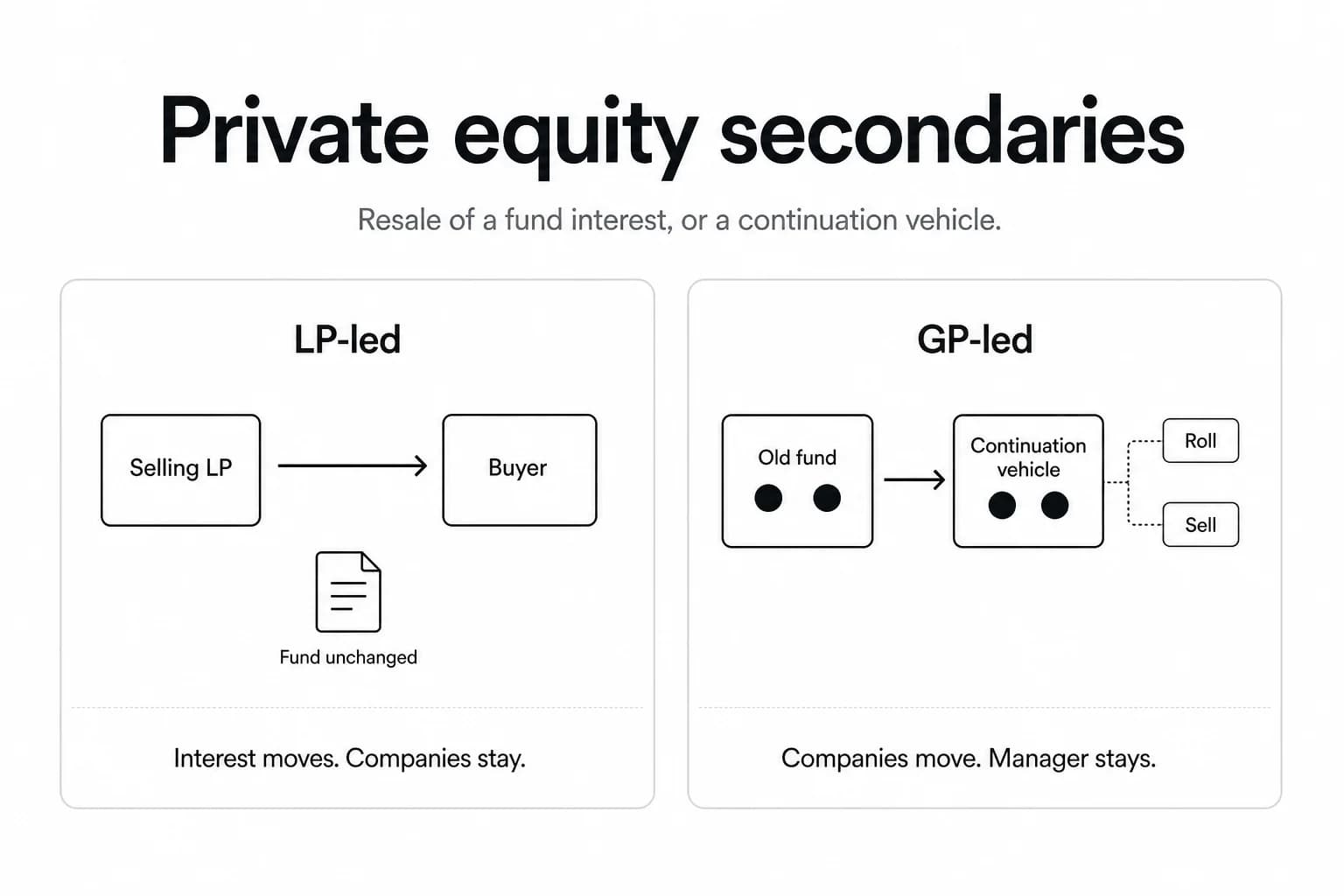
Private Equity Secondaries
An LP sells a fund interest, or a GP moves companies into a continuation vehicle so some LPs can cash out while the firm keeps the asset. Both exist because the fund clock is real.

Private Equity Career Path
The private equity career path from analyst to partner: what the job is at each seat, how promotion and the MBA fork work, compensation and carry vesting, and how megafund versus middle-market changes the ladder.
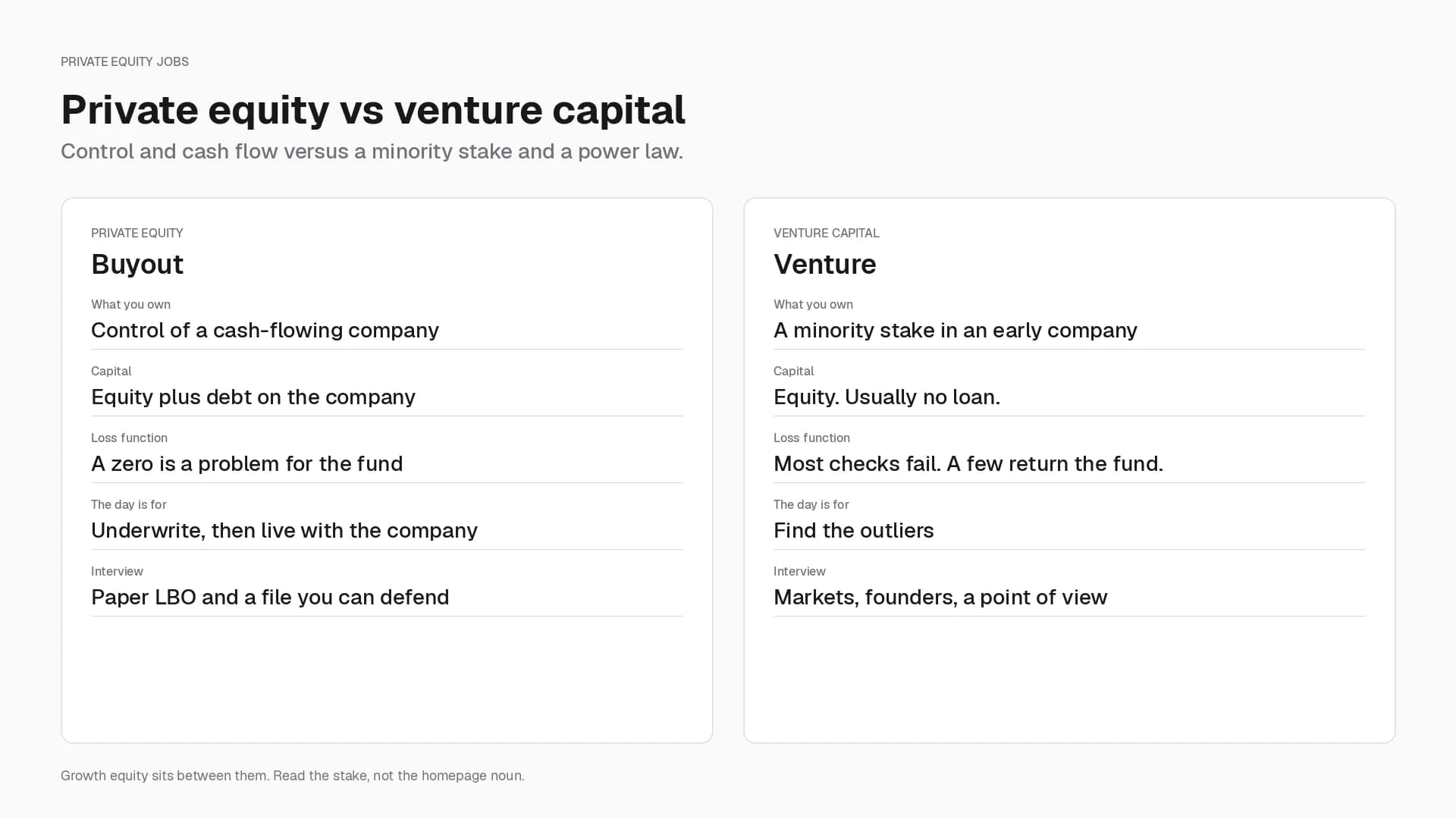
Private Equity vs Venture Capital
A buyout fund takes control of a cash-flowing company, often with debt. A venture fund takes a minority stake and needs a few winners to return the fund. Growth equity sits between them.
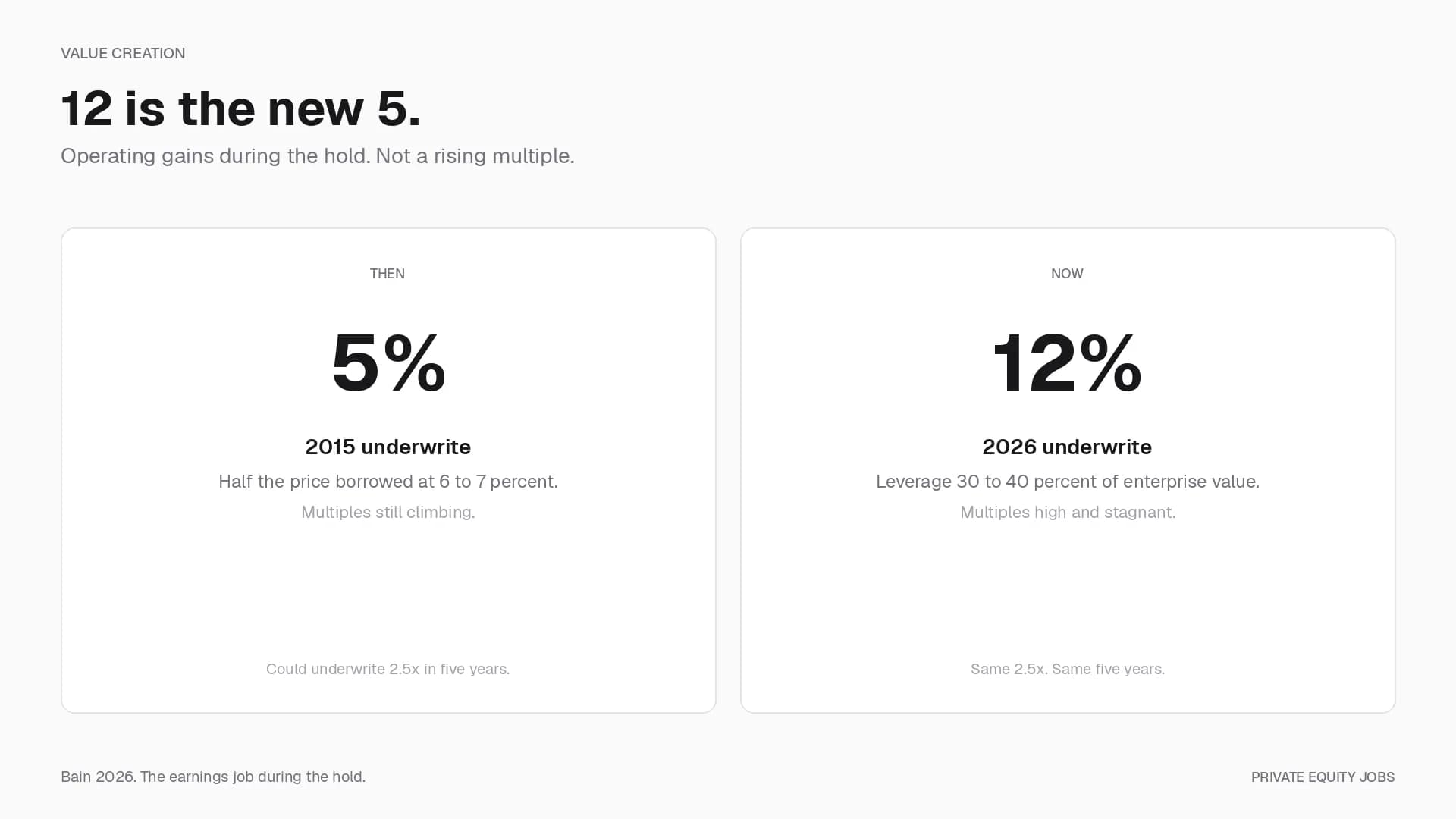
Private Equity Value Creation
Private equity value creation is the work of making a company worth more while you own it. The same 2.5x now needs something closer to 12 percent annual earnings growth.
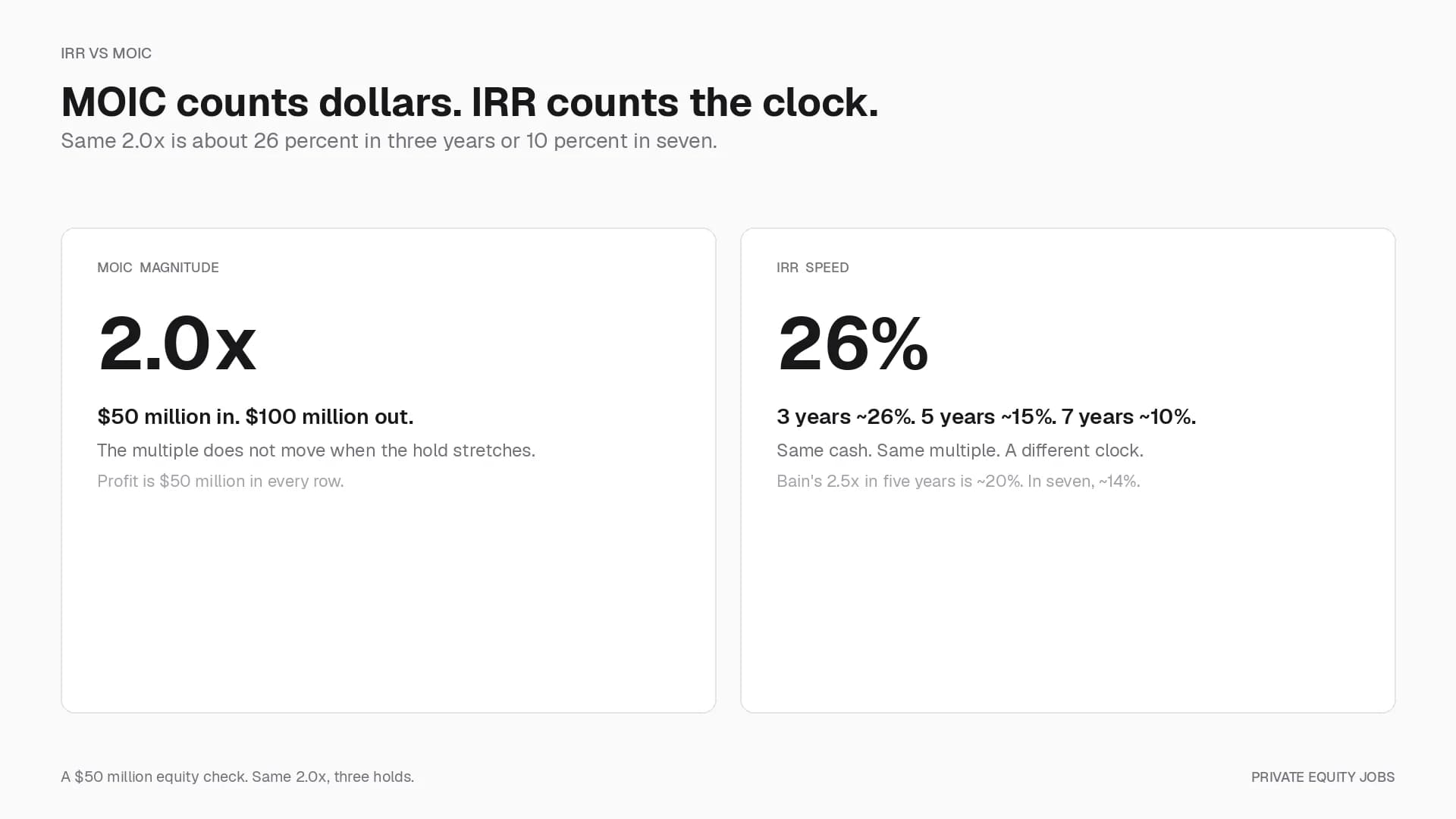
IRR vs MOIC: How Private Equity Scores a Deal
MOIC is how many times the cash came back. IRR is that multiple with a clock. A 2.0x in three years is about 26 percent. The same 2.0x in seven years is about 10 percent.
What Is an LBO (Leveraged Buyout)?
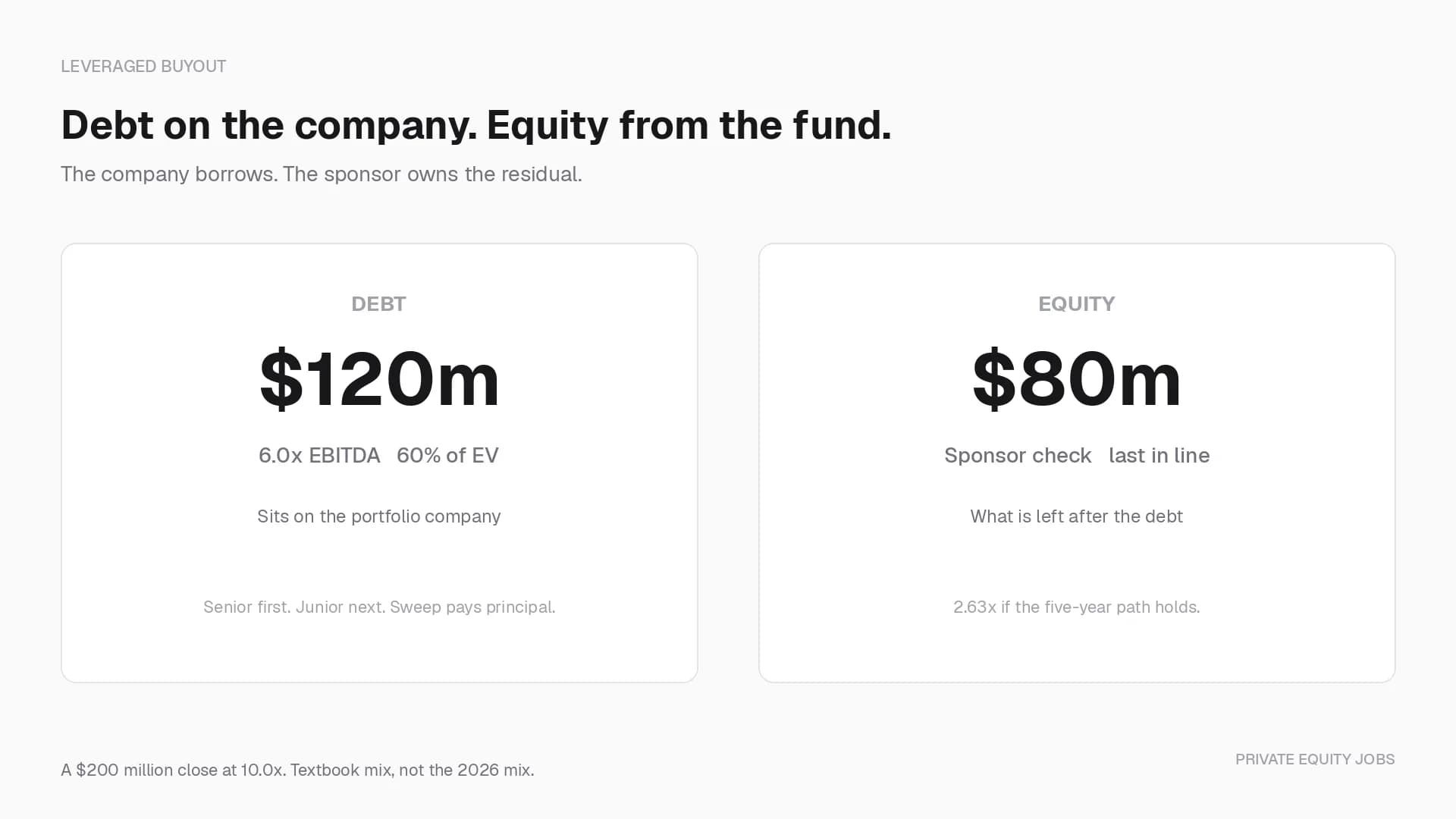
A leveraged buyout is a purchase paid mostly with borrowed money the company, not the fund, has to service. Sources and uses, three return levers, a worked $200 million close, and why 2026 mix is less debt on a more expensive company.
What Is Private Equity
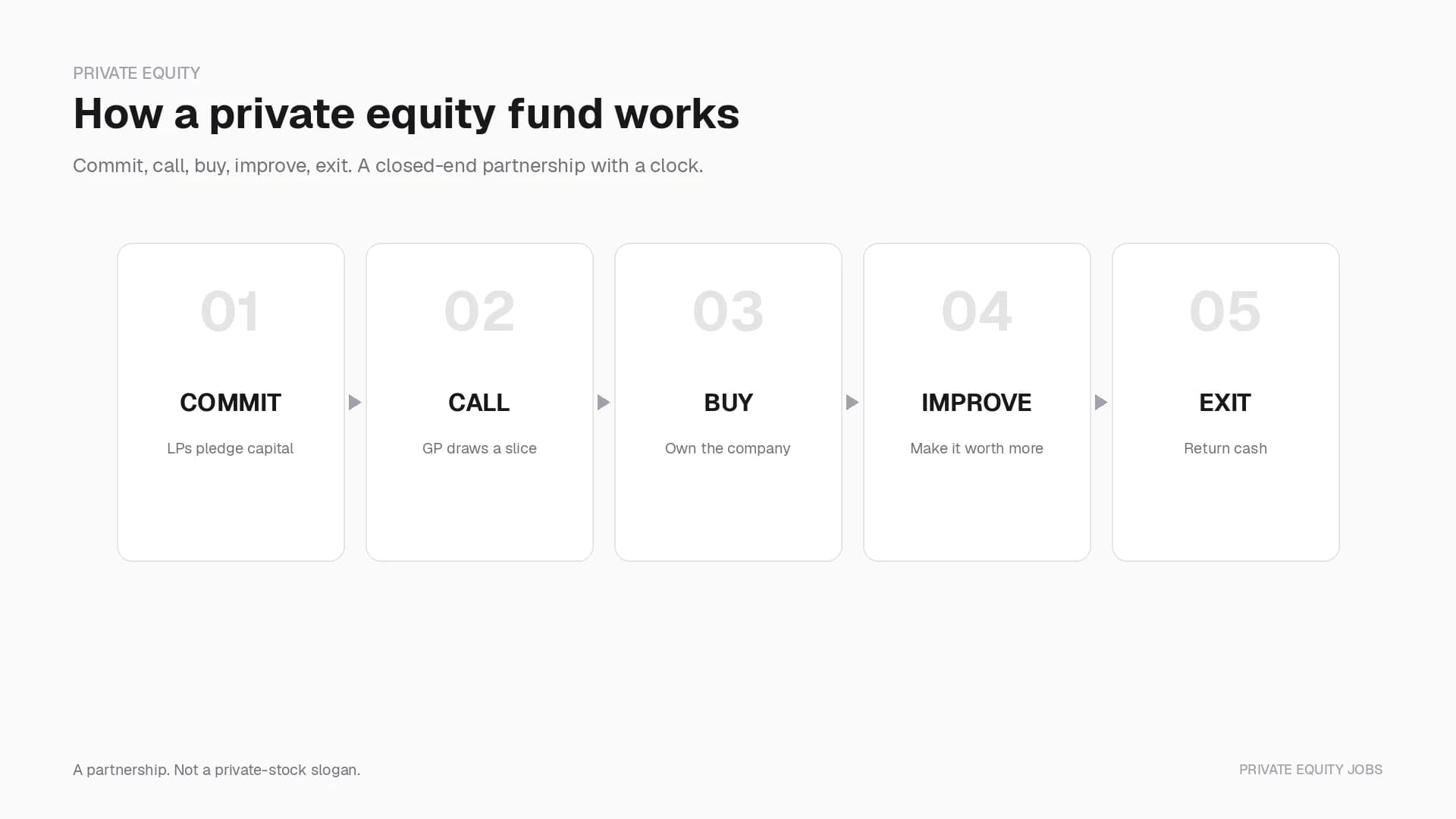
Private equity is not a private-stock vibe. It is a closed-end partnership. Limited partners commit capital. The general partner calls it, buys companies, tries to improve them, and sells. Then 2026 deal math, and where the job actually sits.
Private Equity vs Investment Banking
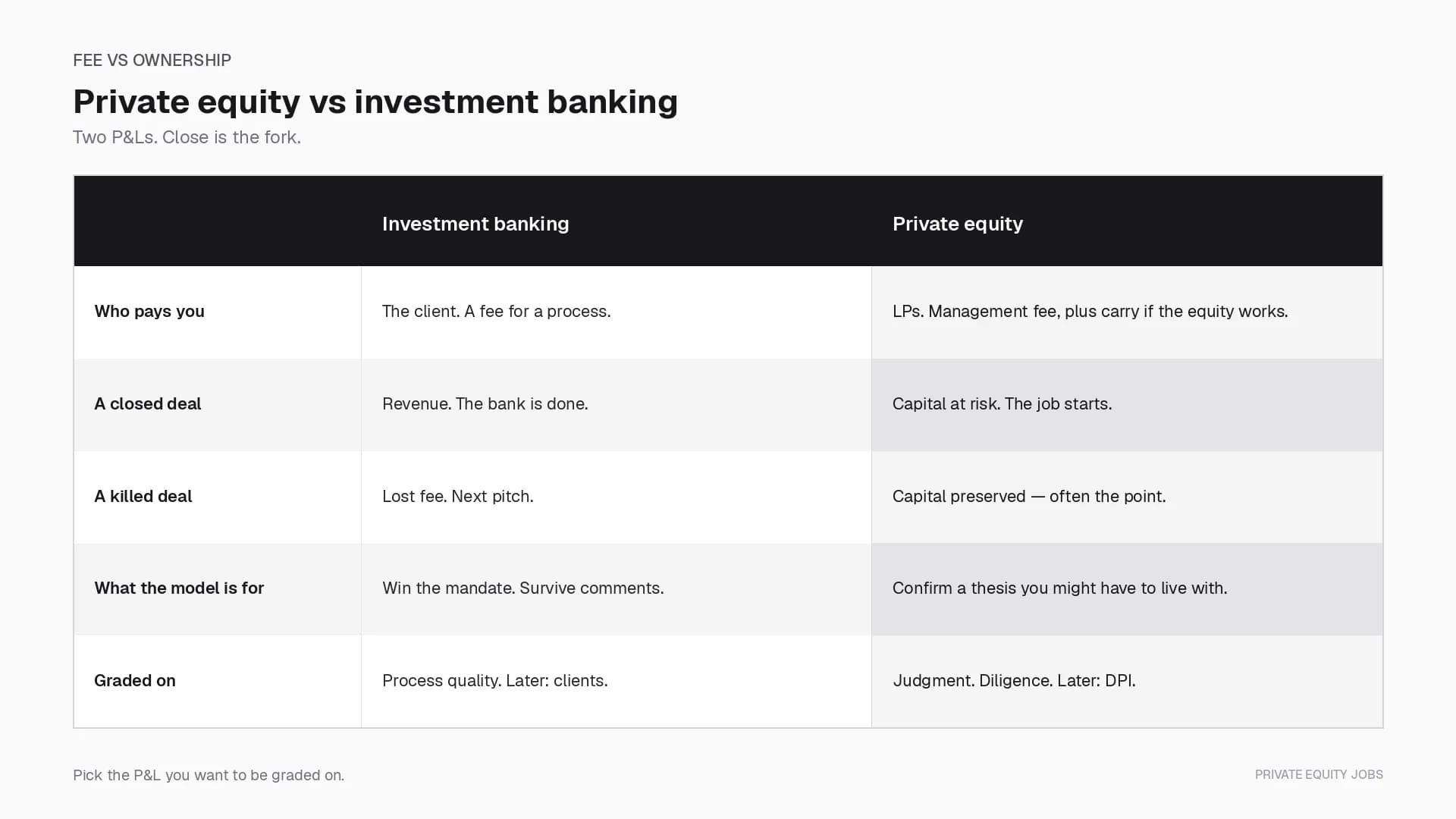
Banks sell a process for a fee. Funds buy companies and live with them. The hours, the pay, and which seat to take follow from that, not from a prestige ranking.
How to Break Into Private Equity
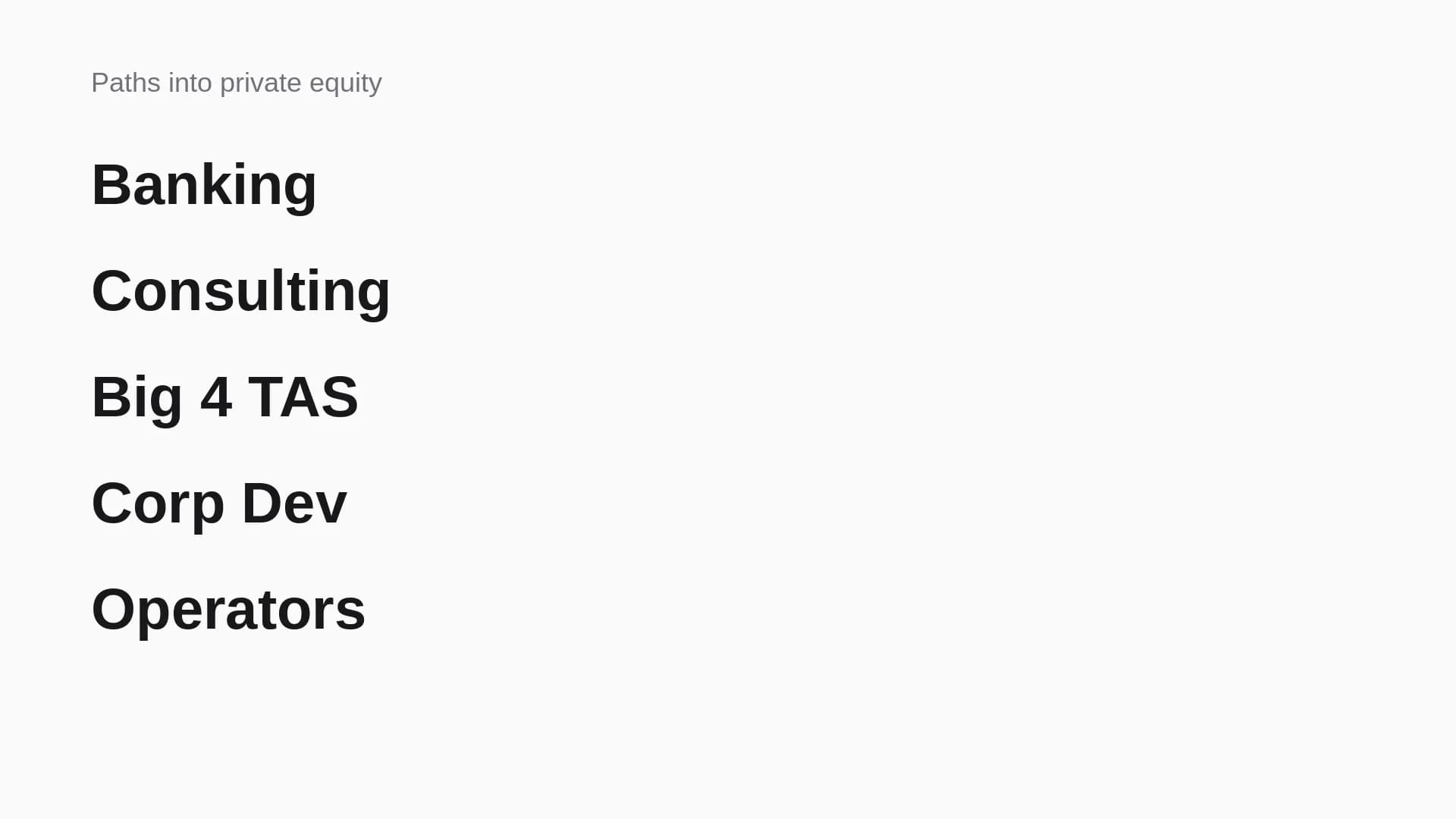
Breaking into PE in 2026 is a probability problem of path × city × fund tier. Megafund on-cycle is a 2–5% game most candidates were never in; middle-market off-cycle is where the industry actually hires.